



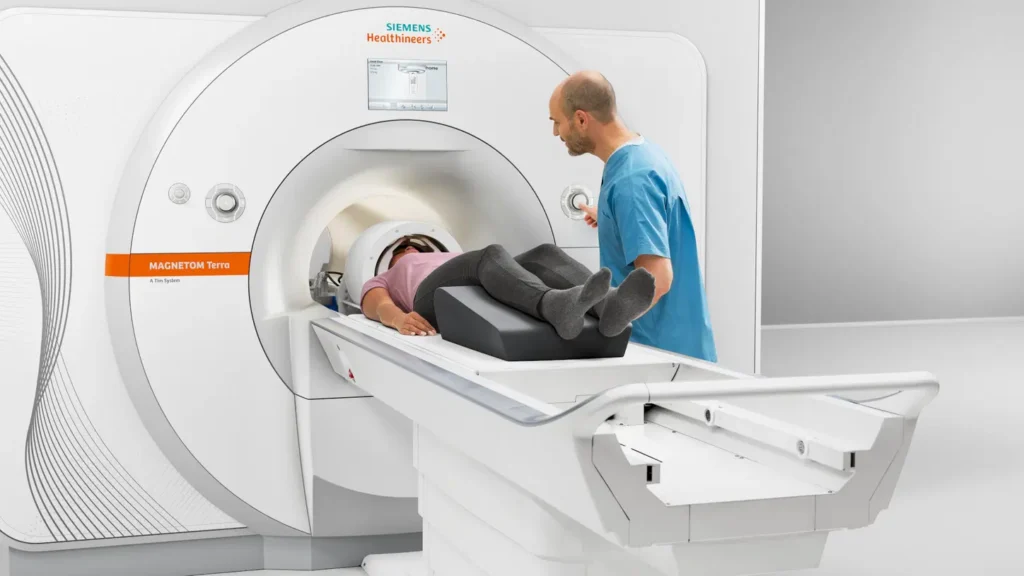
You do not need to fast before most MRI examinations. However, fasting for approximately 4–6 hours is generally required for certain scans, particularly abdominal MRI (upper abdomen and MRCP) and some contrast-enhanced examinations. Before your scan, you must remove all metal objects. If you have any implanted device, such as a pacemaker, cochlear implant or aneurysm clip, you must inform the medical team in advance. Contrast agents are used only when necessary, after assessing kidney function and any history of allergic reactions.
Magnetic Resonance Imaging (MRI) is a radiation-free imaging method that uses a strong magnetic field and radio waves to produce high-resolution images of the inside of the body. Proper preparation is important both for your safety and for image quality. Inadequate preparation may result in your scan being postponed or needing to be repeated.
Do You Need to Fast Before an MRI Scan?
This depends on the body area being examined and whether a contrast agent will be used.
ExaminationIs Fasting Required?
Brain, neck and spine MRI | Usually no
Joint MRI, such as knee, shoulder, hip and wrist | Usually no
Breast MRI | Usually no
Upper abdomen, liver and bile ducts (MRCP) | Usually yes (4–6 hours)
Whole abdomen and pelvis MRI | Often yes
Contrast-enhanced examinations | Depends on the imaging centre's instructions
For examinations that require fasting, the aim is to reduce stomach and bowel movement and ensure that the gallbladder is in a suitable condition for imaging. This helps improve image clarity. Some pelvic and prostate MRI examinations may also require a specific bladder fullness level or bowel preparation.
Do You Take Medication Regularly?
Unless your doctor advises otherwise, you can usually continue taking your medication as normal. People with diabetes should inform the imaging centre when making their appointment if their examination requires fasting, so that appropriate instructions can be provided.
Why Are Metal Objects a Problem During an MRI?
The magnetic field generated by an MRI scanner is extremely strong. Metal objects may move, heat up or cause image distortion (artefacts) within this field. For this reason, you must remove the following items before entering the examination room:
- Jewellery, watches, piercings and belt buckles
- Glasses, hearing aids and removable dental prostheses
- Mobile phones, credit and debit cards, keys and coins
- Hair clips and bras containing metal wires
- Certain medication and nicotine patches, as well as patches containing metal
- Makeup products that may contain metallic particles and certain tattoos (inform the technician because of the potential risk of heating)
In most cases, you will be provided with a metal-free gown to wear during the examination.
Always Inform the Medical Team If You Have Any of These Devices or Conditions
Some implants are considered MRI-safe under specific conditions (MR Conditional), while others may prevent an MRI examination altogether. If you have any of the following, you must inform the imaging centre when booking your appointment and again before the scan:
- A pacemaker or defibrillator
- A cochlear (inner-ear) implant
- A cerebral aneurysm clip
- An insulin pump or nerve stimulation device
- A history of metal fragments in or around the eye (for example, following an occupational accident or exposure to metal shavings)
- An artificial heart valve, stent, joint prosthesis, screw or metal plate
- Bullet or shrapnel fragments in the body
Bringing previous surgical reports and your implant identification card can help speed up the process. The responsible radiologist will assess whether the examination can be performed safely based on the specific device model. The final safety assessment must always be carried out by the imaging centre.
What Is a Contrast-Enhanced MRI? Are Contrast Agents Safe?
The contrast agent used in MRI is generally gadolinium-based. It helps certain tissues and lesions appear more clearly on the images. It is not used in every MRI examination. When required, it is administered intravenously following the doctor's request and the radiologist's assessment.
What You Should Know Before Receiving Contrast
Kidney function: If you have severe kidney impairment, the use of contrast material must be carefully assessed. If you have kidney disease, bring your latest creatinine test results.
History of allergies: Inform the medical team if you have previously experienced a serious allergic reaction to a contrast agent or medication.
Pregnancy: During pregnancy, contrast agents are generally considered only when absolutely necessary. If you are pregnant or think you may be pregnant, be sure to inform the medical team before the scan.
Breastfeeding: Current guidelines generally indicate that it is not necessary to interrupt breastfeeding after gadolinium administration. Nevertheless, confirm the appropriate course of action with your doctor.
A mild sensation of warmth, a metallic taste in the mouth or, rarely, nausea may occur after contrast administration. These effects are usually temporary. Serious reactions are rare, and imaging centres are prepared to manage them.
How Long Does an MRI Scan Take and What Happens During the Examination?
Depending on the body area being examined and whether contrast material is used, an MRI scan generally takes between 15 and 60 minutes.
During the examination:
- You will be asked to lie still on the examination table. Movement can cause the images to become blurred.
- The scanner produces loud knocking or tapping sounds. You will be provided with headphones or earplugs.
- You will not feel pain. A mild warming sensation may sometimes occur.
- You can communicate with the technician through an intercom system.
If you experience claustrophobia or a fear of enclosed spaces, inform the imaging centre when booking your appointment. Receiving information about the procedure beforehand, keeping your eyes closed, using breathing techniques and, when necessary, considering alternative approaches under medical supervision may help reduce anxiety.
High-field scanners, such as 3 Tesla MRI systems, provide high-quality images and can help make examination time more efficient.
What Should You Bring on the Day of Your MRI?
- Your doctor's referral or MRI request form
- Identification and, if applicable, insurance or institutional details
- Previous MRI, CT and ultrasound images and reports (these are particularly valuable for comparison)
- Recent blood test results, especially kidney function tests, if contrast will be used
- Implant identification cards or surgical documents
- A list of the medications you take
Wearing comfortable clothing without metal accessories, such as trousers without zips and a cotton T-shirt, can make preparation easier.
Frequently Asked Questions About MRI
Can I drink water before an MRI scan?
Even when fasting is required, water is usually permitted. However, check with the imaging centre to confirm the specific instructions for your examination.
Is MRI harmful? Does it involve radiation?
No. MRI does not use X-rays or ionising radiation. It works using magnetic fields and radio waves.
Can I have an MRI if I have tattoos?
Yes, in most cases. Some tattoo inks may contain metallic particles, which can occasionally cause a warming sensation during the scan. Inform the technician about your tattoos before the examination.
Can I have an MRI during pregnancy?
If clinically necessary, a non-contrast MRI can generally be considered during pregnancy. The decision is made by your doctor and radiologist based on your individual circumstances.
Do I need to do anything after a contrast-enhanced MRI?
Most people can return to their normal daily activities after the scan. Drinking plenty of water is generally recommended. If you experience any symptoms or discomfort, contact the imaging centre.
When will my MRI results be ready?
The reporting time depends on the type of examination. You can also access your results through Centermed's online results system.
Conclusion
Preparing for an MRI scan is usually straightforward: find out whether fasting is required, remove metal objects, disclose any implanted devices and provide information about your kidney function and allergy history if contrast material will be used.
If you are unsure about anything, asking the imaging centre when booking your appointment can help prevent unexpected issues on the day of your scan.
At Centermed, we provide a safe and comfortable imaging experience using our 3 Tesla MRI system, under the supervision of experienced radiologists.
For appointments and further information, call 444 2 211 or contact us via WhatsApp at +90 530 413 96 48.
This article is intended for general informational purposes only and does not replace medical advice. Please consult your doctor and the imaging centre for instructions specific to your individual circumstances before your examination.